

On the costume rack, a black cape hangs between a striped shirt and a pair of wings. Add two fangs and everyone knows who it belongs to. Yet the cape, the fangs, the garlic and that suspiciously empty mirror came together over centuries. The vampire had plenty of help getting dressed.
Vampires grew out of beliefs about dead people returning to harm the living, especially in eastern and southeastern Europe. Books, theater and movies later gave them their best-known faces. There is no reliable evidence that supernatural vampires exist, but the stories and historical investigations behind them have left a long trail.
Jump to: Origins and timeline · Are they real? · Garlic · Mirrors · Being invited in · Dracula · Costume and makeup.
Where did vampires come from?
The familiar vampire brings together European beliefs about returning dead people and characters invented by writers. Its history has several roots, which makes naming one “first vampire” difficult.
When deaths followed one another in a household, some communities blamed someone who had recently died. Suspicion could lead to opening graves. These feared figures were often relatives or neighbors, far removed from the polished count welcoming guests to his castle.
Scholar Nick Groom traces reports from Serbia through European newspapers. Fiction turned the vampire into a wealthy stranger moving through fashionable society. Eventually, he joined the Halloween characters and monsters your child recognizes today.
| Date | What happened |
|---|---|
| 1725 | A report about Peter Plogojowitz in present-day Serbia reached Vienna’s Wiener Diarium. Villagers accused him of returning after death. |
| 1731–1732 | Deaths in Medveđa associated with the Arnold Paole case prompted medical and military inquiries. The resulting report was signed in January 1732. |
| 1819 | John William Polidori’s The Vampyre introduced the aristocratic Lord Ruthven. Read it on Gutenberg. |
| 1872 | Sheridan Le Fanu’s Carmilla told of a mysterious visitor and a young woman named Laura. Read it on Gutenberg. |
| 1897 | Bram Stoker published Dracula, bringing together garlic, mirrors, bats and the invitation rule. |
| 1922 | F. W. Murnau’s silent film Nosferatu brought Count Orlok to the screen. |
| 1924 and 1927 | Stage adaptations by Hamilton Deane, then Deane and John L. Balderston on Broadway, helped establish the formally dressed, caped count. |
Vampires joined a holiday with its own history. Their route into the costume parade is one strand in where Halloween came from.
Are vampires real?
Supernatural vampires belong to belief and fiction; historical vampire cases show how people responded to fear, illness and death. An official report can establish that villagers opened a grave and accused a dead neighbor. It cannot, by itself, establish that the neighbor returned to attack them.
Folklorist Paul Barber compared descriptions from such cases with natural changes after death. Swelling and bodily fluids could be mistaken for signs of recent feeding. His work helps explain how people could observe something real and reach a supernatural conclusion.
You may also hear that porphyria caused vampire legends. That is a disputed hypothesis. Maranda and colleagues challenged the association in JAMA Dermatology in 2016. Drawing a line from a few symptoms to a monster oversimplifies both the history and the illness, and can stigmatize people living with it.
What happened to Mercy Brown in New England?
Mercy Lena Brown was a young Rhode Island woman who died of tuberculosis in January 1892. Other members of her family had been ill or died, and suspicion fell on the dead as a supposed cause of the living family members’ illness. Her body was exhumed that March.
The Rhode Island Historical Society tells her story using family records and contemporary newspaper coverage. It is a history of bereavement, disease and an attempt to find an explanation. When you discuss it with an older child, keep Mercy in view as a person who was ill and died, rather than turning her into a Halloween villain.
Why do vampires hate garlic?
Garlic served as a protection in folk beliefs before it appeared in Dracula. In 1885, Emily Gerard described Transylvanian customs using it against witchcraft and plague, alongside practices concerning feared dead people.
Stoker gives that protection a memorable place in Lucy’s bedroom. Van Helsing brings garlic flowers, puts them around her neck and uses them around the room. The flowers matter: this is a protective barrier within the story, rather than simply a character disliking a strong smell.
Explaining the custom through garlic’s medicinal properties or an allergy takes another step: neither the custom nor the novel establishes that origin.
Why don’t vampires have reflections?
In Dracula, a missing reflection is one of the clues that exposes the count. Stoker shows it in Chapter II: Jonathan Harker is shaving when he hears his host behind him. The mirror shows the room, but leaves the count out.
“But there was no reflection of him in the mirror!” Harker writes. Dracula then throws the mirror out of the window. In Chapter XVIII, Van Helsing includes the missing reflection among the vampire’s powers and limitations.
The novel states the rule without explaining how it works. As a storytelling device, it does a great deal with very little. An ordinary object contradicts what Harker thinks he can see, and suddenly his host’s friendly welcome feels very different.
Stories that travel without a source
| People say… | What we know |
|---|---|
| Silver in old mirrors stops vampires from appearing. | Stoker describes the missing reflection without blaming the mirror’s metal. |
| A vampire has no reflection because it has no soul. | That is a symbolic interpretation; Harker’s scene does not give that explanation. |
| Garlic proves that vampires had porphyria. | Medical specialists have challenged the proposed link between the illness and vampire lore. |
Why do vampires have to be invited in?
An invitation is another rule in Dracula: a member of the household must invite the vampire in the first time. Van Helsing explains in Chapter XVIII that, afterward, the vampire can return freely. The novel leaves the rule’s origin unexplained.
A doorstep makes a good way to picture it. The character can reach the house, but crossing the threshold depends on someone inside. That gives a story a moment of choice and suspense: a visitor is waiting, and a person might let him in.
Why do vampires wear capes and sleep in coffins?
The cape became part of the vampire’s stage appearance, while resting in a grave came from beliefs about the returning dead and appears in Dracula. Two different strands ended up in the same costume.
Stoker’s count already wears a cloak. Theater helped establish the combination of evening clothes, cape and raised collar that makes the count so easy to recognize. Hamilton Deane’s adaptation opened in Derby, England, in 1924. Deane and Balderston’s Broadway version followed in 1927, with Bela Lugosi as Dracula. Lugosi played him on screen in 1931.
The novel’s boxes of earth serve another purpose: they provide resting places connected to the vampire’s homeland. Stoker also lets Dracula take the shape of a bat. Spread a cape and its winglike outline gives your child something to act out without reenacting the frightening parts.
Halloween decorations arrived from other places, too. The Halloween scarecrow began with a job in the fields.
Who was Dracula?
Dracula is the fictional count in Bram Stoker’s 1897 novel. His name connects him with Vlad III, a historical ruler of Wallachia in present-day Romania.
Vlad III lived in the 15th century, approximately from 1431 to 1476 or 1477, during wars and struggles for power. He is known as Vlad the Impaler. Dracula scholar Elizabeth Miller points out that Stoker’s working notes contain little information about him: the novelist took the name Dracula, while the extent of the historical ruler’s influence remains debated. The prince and the bat-transforming count who travels to England belong to different kinds of history.
Which famous vampires appear in books and movies?
Lord Ruthven, Carmilla and Dracula appeared in books before Count Orlok reached the screen. Each puts a different face on the mysterious visitor.
- **Lord Ruthven, The Vampyre (1819), by John William Polidori.** Young Aubrey accompanies an enigmatic aristocrat. The danger moves through fashionable company, helped by a title and respectable manners.
- **Carmilla, Carmilla (1872), by Sheridan Le Fanu.** Laura receives a young stranger at the castle where she lives with her father. Their growing closeness carries the mystery.
- **Count Dracula, Dracula (1897), by Bram Stoker.** His journey from Transylvania to England connects a castle, a ship and homes that the other characters try to protect.
- **Count Orlok, Nosferatu (1922), directed by F. W. Murnau.** Max Schreck plays the bald, long-fingered vampire. The British Film Institute describes Florence Stoker’s successful copyright lawsuit: the unauthorized adaptation faced an order to destroy its prints. Some survived.
How can you make a vampire costume and makeup for kids?
A short cape, a cardstock collar and fangs painted on the cheeks give your child a recognizable vampire costume. Your child chooses the colors; you handle cutting, fastening and makeup.
Before you begin. Use face cosmetics labeled for your child’s age and the area where you will apply them. Keep acrylic paint and markers on paper. The FDA recommends a skin test 24–48 hours ahead. Follow the label and remove anything that irritates. Spain’s consumer organization OCU advises against makeup under age three and fake blood under fourteen. For children under three, use clothing only, without makeup or fangs in the mouth. Keep eyes, nose and mouth clear, and skip eye makeup on little ones. The American Academy of Pediatrics recommends properly fitting costumes to prevent trips and falls. Keep the cape above the knees, use shoulder fastenings that release easily, and avoid neck cords. Check that your child can walk, see and breathe freely. Keep fabric away from candles and flames.
Materials and time. Lightweight black fabric, black or red cardstock, adult-use scissors and hook-and-loop fasteners to attach the cape to a shirt’s shoulders. For makeup: white, purple and red face cosmetics, a clean sponge and brush. Allow roughly 30–45 minutes for the costume and 10 for makeup, plus the skin test the day before.
Make a high-collared cape
- You measure and cut a fabric rectangle from the shoulders to above the knees. Round off the bottom corners.
- Your child chooses a collar color and decorates a paper practice piece. You cut a cardstock collar with rounded points, sized to sit behind the head without covering ears or face.
- You attach the collar to the back of the shirt and fasten the fabric at the shoulders with easy-release closures. Leave out pins and neck ties.
- Your child tests it: walk, sit and raise both arms. You shorten or adjust anything that gets in the way.
Pair it with the Halloween printables for a table activity after the costume parade.
Add pale cheeks and painted fangs
- You dab a thin layer of white onto the cheeks and forehead, away from eyes and lips. Let your child choose how much: two small patches can be enough.
- You add a little purple to the outer cheekbones. For an older child’s shadowed-eye effect, use only products specifically labeled for the eye area and follow their directions.
- You paint two small white triangles on a cheek as fangs, with an optional red drop beside them. Keep everything away from the mouth; use no fake blood.
- You remove the cosmetics as the label directs when the activity is over. Painted fangs leave the mouth free for talking and eating. If an older child uses toy fangs, follow the labeled age, remove them for meals and avoid loose pieces or improvised glues.
How can you explain vampires to a young child?
A short explanation can answer the question without taking your child into a horror scene.
Read aloud, ages 4–8
Vampires are characters in legends and books. Long ago, some people believed the dead could come back. Later, writers gave vampires castles, capes and special powers. In Dracula, the count can turn into a bat, and garlic helps protect a bedroom. When you put on a cape, you are playing with those stories. You get to decide when the game begins and when it ends.
What can you discuss in class?
One question helps children notice how a character changes between stories: What would you change about a vampire so we could still recognize it, but it would feel scary in a different way? A cape, mirror and garlic bulb can give the conversation something concrete to work with.
Frequently asked questions
Does sunlight destroy Dracula?
In Stoker’s novel, daylight limits the count’s powers, but he can appear during the day. Books and movies change the rules, so the answer depends on the particular story.
Are vampire bats real?
Yes. Some bats feed on blood. They are animals, and sharing a name with a monster does not make them transformed people. In Dracula, turning into a bat is one of the count’s supernatural powers.
What do you need for an easy vampire costume?
A shirt, a short cape with easy-release fastenings and a cardstock collar. Makeup and fangs are optional. Your child can finish the character with a formal greeting and a grand sweep of the cape.
If your child has another question ready, explore where the familiar witch costume came from together.
Halloween activity books and printables
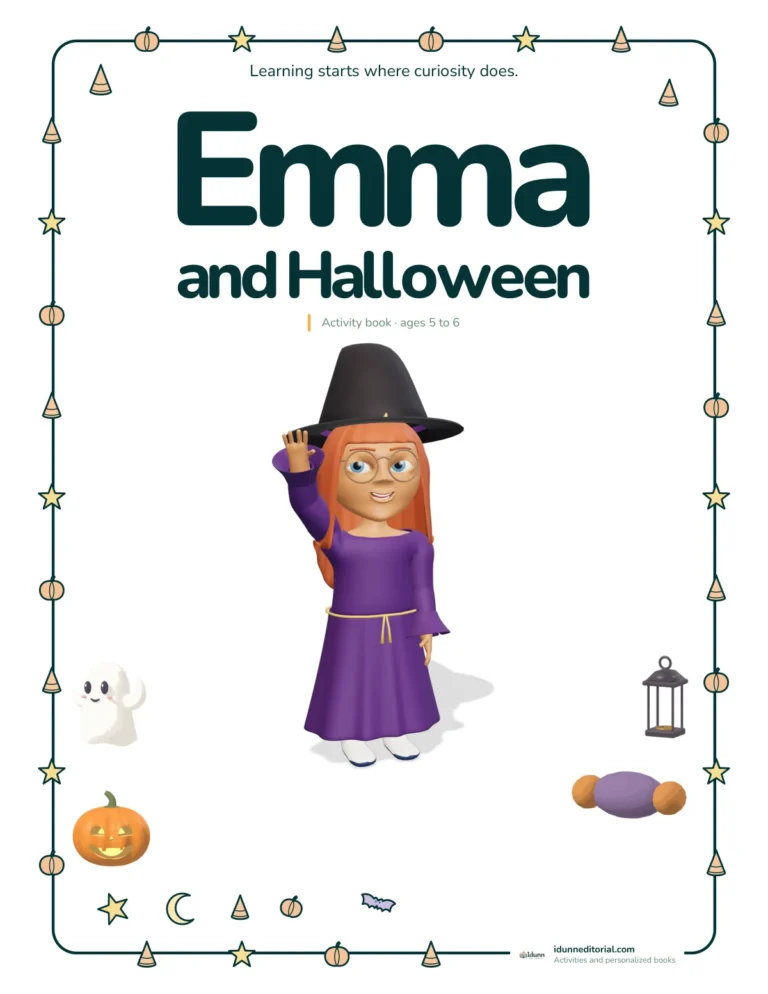
Personalized Halloween activity book
Their character in costume, with their name on the cover
US$5.99
Personalize
Sources
- **Bram Stoker, Dracula (1897), Chapters II, X–XI and XVIII.** Project Gutenberg, no. 345. Primary text for the mirror, garlic, invitation and the count’s powers.
- **Emily Gerard, “Transylvanian Superstitions,” The Nineteenth Century, 18 (1885), pp. 130–150.** Gutenberg. Historical testimony about beliefs collected by the author, rather than evidence of supernatural effects.
- **Nick Groom, “Dracula’s Pre-History: The Advent of the Vampire,” in The Cambridge Companion to Dracula, ed. Roger Luckhurst (Cambridge University Press, 2017).** Publisher’s excerpt. Academic history of the Serbian reports and their circulation.
- **Paul Barber, “Forensic Pathology and the European Vampire,” Journal of Folklore Research, 24.1 (1987), pp. 1–32.** JSTOR record. Specialist research comparing historical accounts with decomposition.
- **Eric Laurent Maranda et al., “Porphyria and Vampirism—A Myth, Sensationalized,” JAMA Dermatology, 152.9 (2016), p. 975.** DOI. Medical criticism of the proposed porphyria connection.
- Jennifer L. Galpern, “Have Mercy,” Rhode Island Historical Society (2016). Article. Institutional account drawing on family records and contemporary newspapers.
- **Derby Museums and Dracula Returns to Derby; The Broadway League, Dracula (1927).** Project publication · Broadway record. Institutional sources for the stage productions and costume history.
- **Elizabeth Miller, interview, PBS FRONTLINE/World; Treccani, “Vlad III.”** Interview · Historical entry. Stoker scholarship and a historical reference for the name and the prince.
- **Polidori, The Vampyre (1819); Le Fanu, Carmilla (1872).** Gutenberg texts linked in the timeline. Primary sources for Ruthven and Carmilla.
- British Film Institute, “Nosferatu (1922).” Linked in the character list. Institutional film history for Orlok and the copyright dispute.
- Smithsonian, interview with mammal specialist Kristofer Helgen (2010). Article. Institutional scientific source for vampire bats’ diet.
- **FDA, Halloween safety guidance and Novelty Makeup; American Academy of Pediatrics, Halloween Safety Tips; OCU, Halloween safety (2025).** FDA cosmetics guidance · OCU. Public-health, pediatric and consumer guidance for the activity.
Leave a Reply