
There’s a shoebox on the table. Your child has claimed it as a treasure chest. Beside it sit a shirt, a bandana and a map with the couch turned into an island. The ship leaves this afternoon.
A DIY pirate costume starts with a loose shirt, rolled-up pants, a bandana and a paper hat. Real pirates wore sailors’ clothes; some captains added elaborate coats. An eye patch could cover an injured or missing eye. The idea that pirates used one to see below deck remains a popular theory. 1 2 4
Jump to: real pirate clothes · the eye patch · famous pirates · DIY costume and hat · easy makeup · treasure hunt.
The costume works for a birthday, Carnival in Spain or Children’s Day in Mexico. Afterward, the ocean activity book keeps the ships and sea animals close, with your child’s name or in a version without personalization.
What did real pirates wear?
They wore sailors’ clothes: loose shirts, sturdy breeches or pants, jackets and headscarves. During the broad period called the Golden Age of Piracy, around 1650–1730, clothes had to allow room for hauling ropes and moving across a deck. 1 23
The London Museum holds a sailor’s breeches from around 1600, made from strong linen, heavily patched and marked with tar from ropes. They predate Blackbeard, but show the kind of work clothing sailors continued to wear in later centuries.
Some captains wore long coats and three-cornered tricorn hats. Stolen clothing could supply a fine outfit. Stripes help identify the costume; real crews wore varied clothes. 2
Women were pirates too. At Anne Bonny and Mary Read’s trial, a witness described jackets, long trousers and handkerchiefs tied around their heads. Girls and boys can choose the same costume pieces. 3
Why did pirates wear eye patches?
An eye patch could cover an injured or missing eye. Pirates and other sailors suffered serious injuries at sea; later portrayals made the patch a familiar part of the pirate look. 4
Piracy historian Benerson Little points out the lack of period evidence for keeping one eye ready for darkness. Covering an eye also limits depth perception and the field of view. For dress-up, save the patch for a seated photo and move it to the forehead before walking. 4 28 29
Stories people tell, without a period source
| People say… | What we know |
|---|---|
| Pirates covered an eye so they could see immediately below deck. | MythBusters tested dark adaptation. Its modern demonstration makes an interesting theory; it does not establish what pirates actually did. 26 |
| Blackbeard wore an eye patch. | Historian Rebecca Simon describes the lack of evidence for eye patches among pirates of his era. 26 |
Where do the parrot, peg leg, hook and X-marked map come from?
Books brought many of these details together. Robert Louis Stevenson’s Treasure Island helped fix the map and shoulder parrot in our imagination; J. M. Barrie’s Peter Pan gave us Captain Hook. 7 9
In Treasure Island, Jim Hawkins discovers a map marked with red crosses. Long John Silver keeps a parrot named Captain Flint and uses a crutch after losing a leg. Sailors did sometimes have wooden prosthetic legs, but Silver gets around with a different aid. 5 7
Barrie’s pirate has an iron hook in place of his right hand. For dress-up, your child can keep both hands free; a paper hat gives them a character. 9
| Date | A piece of the story |
|---|---|
| 1699 | William Kidd buries part of his loot on Gardiner’s Island, near New York. It is a particular case; pirates generally spent or sold what they stole. 5 |
| 1883 | Stevenson publishes Treasure Island, with its map and one-legged cook. Read it on Project Gutenberg. |
| 1904 | Peter Pan reaches the stage. 9 |
| 1911 | Barrie publishes the novel Peter and Wendy. Read it on Project Gutenberg. |
Did pirates exist? Famous pirates
Yes. Pirates attacked ships, stole cargo, raided ports and took hostages. People lost their belongings, freedom and lives. The history includes the people harmed by those attacks. 11 12
Blackbeard, known as Edward Teach or Thatch, died in 1718. His name is linked to the Queen Anne’s Revenge. In May of that year, he blockaded Charleston, South Carolina, demanding medicine in exchange for releasing hostages. Soon afterward, his ship ran aground in North Carolina. The state’s Queen Anne’s Revenge Project studies the wreck. 10 11
Anne Bonny and Mary Read sailed with John Rackham’s crew and were tried in Jamaica on November 28, 1720. Their names answer your child’s question about female pirates. 3 25
Where can you find their history on a map?
Nassau, in the Bahamas, was a pirate base. Charleston’s harbor and North Carolina’s coast show other parts of the story. Mark the base, port and shipwreck on a map. 11 27
In Mexico, Campeche built defenses against pirate and privateer attacks; UNESCO recognizes its historic fortified town. Lorencillo helped sack Veracruz in 1683. Along Spain’s Mediterranean coast, raids by North African corsairs prompted defenses including watchtowers in Murcia. Those walls and towers tell the story from the shore. 12 13 14
Pirate or privateer?
A privateer had a government’s permission to attack its enemies at sea. The written authorization was a letter of marque. A pirate stole on their own account, without that permission. 15
| Pirate | Privateer | |
|---|---|---|
| Authorization | Operated without government permission. | Carried a letter of marque. |
| Targets | Chose ships and cargo to plunder. | Was supposed to attack the enemies named by the authorizing power. |
| Different views of one person | Spain called Francis Drake a pirate. | England recognized him as a privateer. 16 |
Words such as buccaneer and corsair belong to particular places and periods; government authorization explains the distinction between pirate and privateer.
What did a pirate flag look like?
A pirate flag threatened a ship into surrendering. The best-known Jolly Roger has a white skull and crossbones on black. Pirates also used different pictures and red flags. 17
The horned skeleton stabbing a heart is often called Blackbeard’s flag. Queen Anne’s Revenge archaeologist Jeremy Borrelli explains its later origins. A newspaper account from 1718 describes black flags with death’s heads; the familiar horned design came much later.
For the party, color a flag and attach it to the wall or treasure chest. Your child can add their ship’s name.
How can you make a DIY pirate costume?
Start with a striped T-shirt or loose white shirt, rolled-up pants and comfortable shoes. Add a bandana, sash and paper hat. The Mariners’ Museum also suggests a white shirt and rolled-up pants. 24
Before cutting: eyes, neck and movement
Use the eye patch for a seated photo, then lift it to the forehead before walking, running or using stairs. A wide, soft elastic goes around the head, away from the neck. Remove it if it presses. Leave the nose and mouth clear. 28
Keep the hat above the eyes. Choose a short, flexible cardboard sword with a rounded end; skip metal hooks and sharp fittings. The AAP advises avoiding long or sharp swords and clothes that cause trips. 21
Keep bandana and sash ends short, with a fastening that releases easily. Avoid neck cords, pins and small decorations. Keep paper and fabric away from candles and add reflective material for an evening outing. For babies, choose well-fitting clothes with a pirate picture, without a patch or loose accessories. 21 22
Materials: reusable clothes, two fabric scraps, an old T-shirt for a vest, cardstock or craft foam, felt, wide elastic, thin cardboard, pencil, tape and scissors. Estimated time: 40–60 minutes, plus any adhesive drying time.
Clothes, vest and accessories, step by step
- Your child chooses the clothes. Adjust sleeves and pant cuffs to leave hands and feet clear. Have your child sit and raise both arms.
- You make the vest. Lay the old T-shirt flat, cut off its sleeves and cut up the front from the bottom to the neckline. Your child can choose straight edges or broad waves.
- Fit the bandana and sash. The bandana goes around the head; the sash sits loosely at the waist. Keep ends short and make both easy to remove.
- Make the hat together. Cut two matching shapes with a raised center and turned-up sides. Your child adds the skull. Attach the shapes to a wide cardstock headband fitted to their head; tape over joining edges. Craft foam works too.
- You cut the patch. Make a small, soft-edged felt oval and sew the wide elastic to its sides. Fit it without pressure, with supervision, for the seated photo only.
- Your child draws the sword; you cut it out. Use thin cardboard, a short blade and a rounded end. Tape the edges. Leave it on the table during the treasure hunt.
Print the template at 100%, check its scale square and fit the headband before attaching it. For another costume using everyday clothes, the DIY scarecrow costume starts with a shirt.
How can you do easy pirate makeup?
Brown dots on the chin suggest a scruffy beard. Add a mustache or a small pretend scar on the cheek if your child wants one. The bandana works just as well with an unpainted face.
Start with skin safety. Choose cosmetics labeled for your child’s age and the area you will paint. The FDA recommends testing makeup on the arm 24–48 hours beforehand. Keep craft paint and markers off skin. Leave the eye and lip areas bare; Spain’s consumer organization OCU advises against makeup for children under three. 19 22
You’ll need brown and soft red cosmetics, a clean brush and removal supplies as labeled. Allow about 10 minutes, as a guide.
- Your child chooses a beard, mustache or scar. Wash your hands and start with clean skin.
- Dot on the beard across the chin and add a mustache clear of the lip if requested.
- Draw a short red scar on the cheek, well away from the eye. The skin stays intact.
- Remove the makeup if itching or redness appears. Take it off as directed when play ends, before bedtime. 19
How can you set up a party treasure hunt?
Draw a room map, mark a route and hide a shoebox treasure chest. A birthday, classroom or rainy afternoon can have its own island. Allow roughly 20–30 minutes to prepare, depending on the number of clues.
Put one drawing or large card per participant in the chest. Avoid small coins when children under three are present. Everyone hunts with both eyes uncovered, without swords, along a clear route.
- Draw three familiar places: a door, table and couch, for example. Your child can turn them into a harbor, island and cave.
- Place clues in order. Hand over “Look where the books rest.” By the books, leave “Go where we sit to eat.” On the table, leave “Look beside the couch.” Put the chest there, within reach and in view.
- For beginning readers, replace the words with pictures. An adult can read a clue aloud while leaving the finding to the children.
| Pirate-play or sailing word | What it means in the game |
|---|---|
| Weigh anchor! | Time to set sail: the signal to begin, and everyone walks to their clue. |
| Ahoy! | A greeting to another member of the crew. |
| Port | The left side when facing the bow, the front of the ship. 30 |
| Starboard | The right side when facing the bow. |
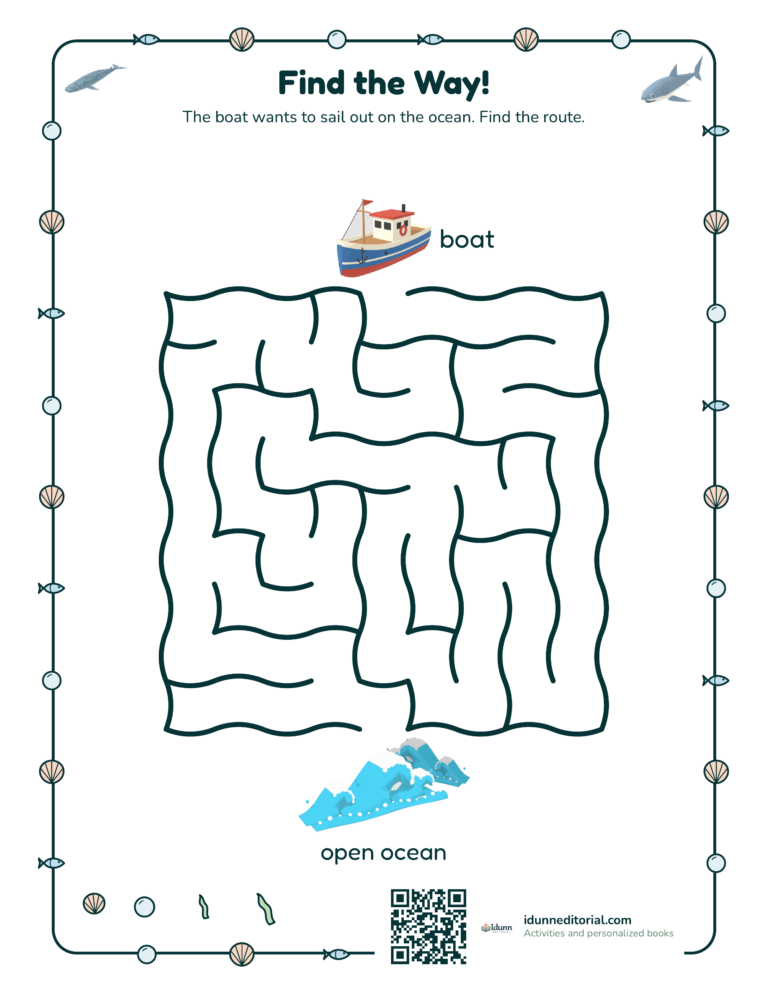
For pirate names, combine a name and a sea animal: “Captain Maya Dolphin.” It is a name for playing. The free ocean mazes can become another treasure-hunt challenge.
When is Talk Like a Pirate Day?
September 19. John Baur and Mark Summers started the celebration in 1995 in Albany, Oregon. It is a modern occasion for playful pirate speech. Try an “Ahoy!” with your child, then let them choose a voice for their own captain. 18
Read aloud, ages 4–8
Pirates were real. They robbed ships and hurt other people. Women were pirates too, including Anne Bonny and Mary Read. Books added adventures with parrots, maps and hidden treasure. In your costume, you can make up an expedition to find a chest together. While we look for clues, both eyes stay uncovered and the sword stays on the table.
For the classroom
What does a crew need so everyone can reach the treasure? Offer different jobs: drawing the map, reading clues, recognizing pictures or carrying the chest. The group finishes together.
Frequently asked questions
What accessories can a girl pirate wear?
The same pieces as any pirate: a bandana or hat, a vest and a sash over comfortable clothes. The patch is optional and stays for a seated photo. Anne Bonny and Mary Read wore sailors’ clothing. 3
How can I make a pirate costume with very few supplies?
Use a T-shirt, rolled-up pants and a bandana. A paper skull on a wide headband can stand in for the hat. Your child can carry the map.
Does this work as a Halloween costume?
The same outfit can join the Halloween monsters in October and return for a birthday or another dress-up day. Store the hat flat and keep the clues inside the chest.
When the party gets quieter, you can settle at the table with the free ocean word searches.
Ocean activity books and printables
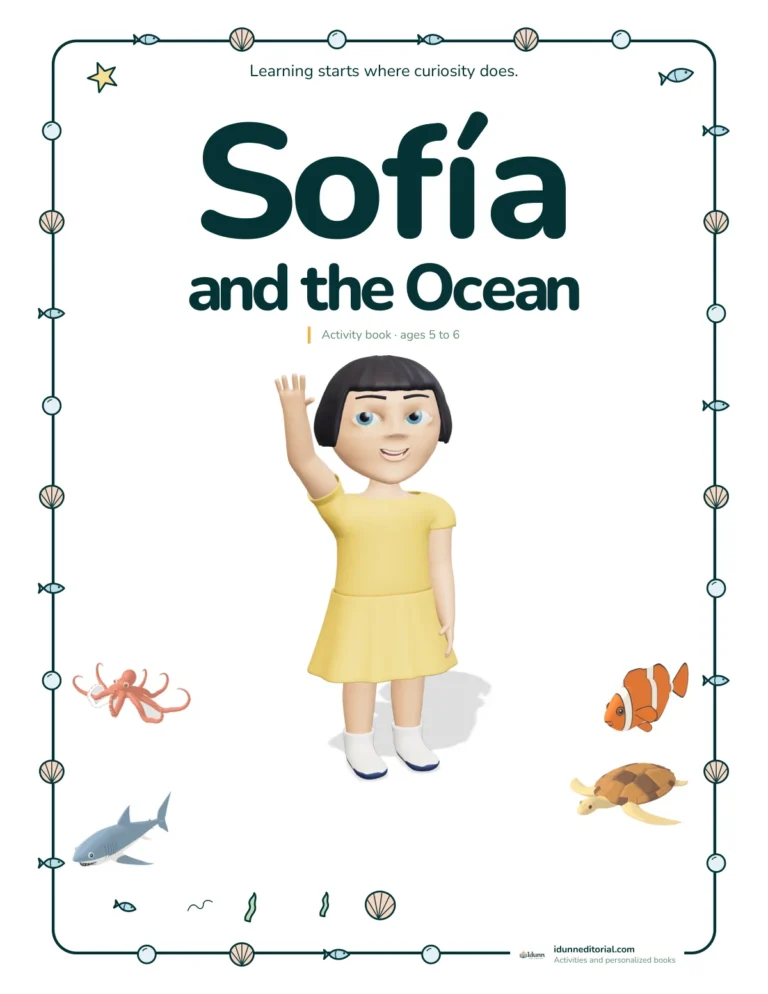
Personalized ocean activity book
Their name on the cover, with a character who looks like them
US$5.99
Personalize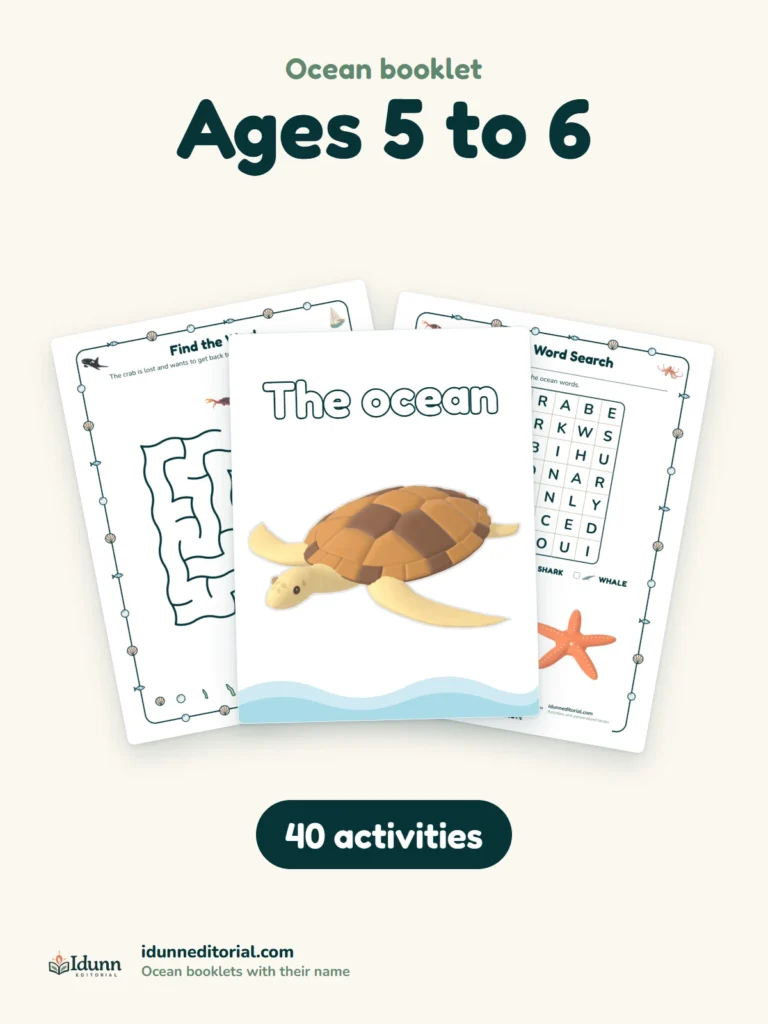
Sources
- London Museum, Breeches, object 53.101/1b, n.d. Catalog record for surviving sailor clothing.
- Mark Cartwright · World History Encyclopedia, Pirate Clothing in the Golden Age of Piracy, 2021. Historical overview with bibliography.
- Trial record · National Library of Jamaica / Internet Archive, The Tryals of Captain John Rackham and Other Pirates, 1721. Trial publication: date and clothing testimony.
- Benerson Little, Did Pirates Wear Eye Patches?, 2017. Historical examination of eye patches.
- James Gill · Royal Museums Greenwich, Pirate myths debunked, n.d. Museum account of injuries, treasure and fiction.
- Robert Louis Stevenson · Espasa-Calpe / Biblioteca Virtual Miguel de Cervantes, La isla del tesoro, 1941 / 2004. Spanish text: Espasa-Calpe, 1941; digitized 2004; chapters VI, VIII and X.
- Robert Louis Stevenson · Project Gutenberg, no. 120, Treasure Island, 1883. Originally published 1883; chapters VI, VIII and X. Primary literary text.
- J. M. Barrie · Argentina.gob.ar education portal, Peter Pan · Recursos de dominio público, n.d. Spanish educational PDF, undated, chapter IV; translator uncredited.
- J. M. Barrie · Project Gutenberg, no. 16, [Peter Pan [Peter and Wendy]](https://www.gutenberg.org/ebooks/16), 1911. 1911 novel, chapters IV–V. Primary literary text.
- U.S. National Park Service, Blackbeard (aka Edward Teach), 2016. Biographical reference for name and death.
- Queen Anne’s Revenge Project · NC Department of Natural and Cultural Resources, Blackbeard’s Story and Facts, n.d. Ship and Charleston blockade history.
- UNESCO World Heritage Centre, Historic Fortified Town of Campeche, inscribed 1999. 1999 inscription and history of the defenses.
- INAH, Con charlas en cantinas y bares, el Centro INAH Veracruz cuenta la historia del puerto jarocho, 2025. Local history: Lorencillo and Veracruz in 1683.
- Región de Murcia Digital, La piratería berberisca en el Reino de Murcia, n.d. Regional history of raids and coastal watchtowers.
- Regione Autonoma della Sardegna · Virtual Archaeology, Los corsarios y los piratas del Mediterráneo, n.d. Heritage explanation of privateering authorization.
- Library of Congress · Worlds Revealed, Mapping the Voyages of Sir Francis Drake, 2023. Maps and differing views of Drake.
- Jeremy Borrelli · Queen Anne’s Revenge Project, Did You Know Blackbeard’s Flag is a Modern Design?, 2017. Archaeological analysis of the flag attributed to Blackbeard.
- Royal Museums Greenwich, International Talk Like a Pirate Weekend, n.d. History and date of the modern celebration.
- U.S. Food and Drug Administration, Novelty Makeup, 2009, still current. Regulator guidance on skin cosmetics.
- American Academy of Pediatrics, Halloween Fun & Safety Tips for Kids of All Ages, 2026. Pediatric costume and accessory guidance.
- Organización de Consumidores y Usuarios, Halloween: OCU alerta sobre los riesgos del maquillaje en los niños pequeños, 2025. Consumer guidance for younger children.
- Society for Nautical Research · Sam Willis and Jamie Goodall, The Golden Age of Piracy · The Mariner’s Mirror Podcast, 2022. Interview with historian Jamie Goodall on periodization.
- Aya Eto · The Mariners’ Museum and Park, Pirate Imagery in the Rare Book Collection – Day 4, 2013. Museum suggestion for modern dress-up.
- Smithsonian Ocean, Ann Bonny and Mary Read, n.d. Museum reference on the two women pirates.
- James Felton · interview with Rebecca Simon · IFLScience, You Probably Believe The Myth About Why Pirates Wore Eye Patches, 2023. Direct interview with historian Rebecca Simon.
- Colin Woodard · Smithsonian Magazine, The Last Days of Blackbeard, 2014. Colin Woodard’s research on Nassau and Blackbeard.
- Johns Hopkins Medicine · Meng Meng Xu, OD, MPH, Halloween and Eye Safety: What You Need to Know, 2026. Costume eye-safety advice from optometrist Meng Meng Xu.
- Royal National Institute of Blind People, Monocular vision (sight in one eye), 2026. Specialist explanation of vision using one eye.
- NOAA · National Ocean Service, Why do ships use port and starboard instead of left and right?, n.d. Authoritative explanation of shipboard directions.
Leave a Reply